

CENTRAL LIBRARY

Welcome to Online Public Access Catalogue (OPAC)

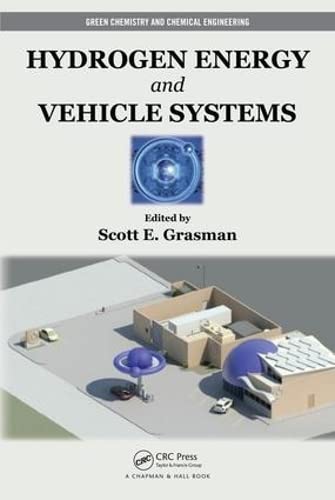
Amazon cover image
Image from Amazon.com

Hydrogen energy and vehicle systems [electronic resource] / edited [by] Scott E. Grasman.

Contributor(s): Material type: TextSeries: Green chemistry and chemical engineeriPublication details: Boca Raton : CRC Press, 2013.Description: xxvi, 332 p. : ill., mapsISBN:
  • 9781439826829 (ebook : PDF)
Subject(s): Genre/Form: Additional physical formats: No titleOnline resources: Available additional physical forms:
  • Also available in print editi
Contents:
1. Hydrogen and electricity : parallels, interactions, and convergence / Christopher Yang -- 2. Hydrogen infrastructure : production, storage, and transportation / Kevin B. Martin and Warren Vaz -- 3. PEM fuel cell basics and computational modeling / Umit O. Koylu, Steven F. Rodgers, and Scott E. Grasman -- 4. Dynamic modeling and control of PEM fuel cell systems / Lie Tang ... [et al.] -- 5. Market transformation lessons for hydrogen from the early history of the manufactured gas industry / Marc W. Melaina -- 6. Fuel cell technology demonstrations and data analysis / Jennifer Kurtz ... [et al.] -- 7. Producing hydrogen for vehicles via fuel cell-based combined heat, hydrogen, and power : factors affecting energy use, greenhouse gas emissions, and cost / Darlene Steward, Karen Webster, and Jarett Zuboy -- 8. Hybrid and plug-in hybrid electric vehicles / Andrew Meintz -- 9. Hydrogen as energy storage to increase wind energy penetration into power grid / Raquel Garde, Gabriel Garc�ia, and M�onica Aguado -- 10. Hydrogen design case studies / Mathew Thomas, John W. Sheffield, and Vijay Moh -- 11. Hydrogen safety / Mathew Thomas -- 12. Hydrogen fuel cell vehicle regulations, codes, and standards / Carl H. Rivk
Summary: "Preface Purpose and Audience Hydrogen shows great promise both as an energy carrier and as a fuel for transportation, portable, and stationary sources; however, the expanded use of hydrogen as a renewable energy source raises a number of concerns and challenges that complicate planning efforts. Organizations are researching, developing, and validating hydrogen pathways to establish a business case for market implementation. However, significant research and educational challenges still must be addressed. The use of hydrogen technologies addresses critical societal issues related to energy security, stability, and sustainability. First, hydrogen may be produced from local resources, thus eliminating the need for complex energy/fuel supply lines. Second, hydrogen, used in conjunction with renewable energy sources, provides a stable method of energy/fuel production. Third, hydrogen produced from renewable sources provides clean, emission-free energy/fuel. Hydrogen technology constitutes a highly interdisciplinary field that extends from the fundamentals of materials, electrochemical processes, and fuel processing/storage systems, to complex design concepts for hybrid vehicles, and renewable power/fuel systems. Infrastructure analysis, market transformation, public policy, safety, and environment also play key roles. Additionally, sustainable energy systems is an emerging field that aims to develop new and improved energy technologies, systems, and services, while understanding the impact of energy on the economy and society. Hydrogen technology research encompasses traditional engineering disciplines (biological, chemical, electrical, environmental, geological, material science, mechanical, systems), sciences (biology, chemistry, mathematics, physics)"-- Provided by publish
Tags from this library: No tags from this library for this title. Log in to add tags.
No physical items for this record

Includes bibliographical references and index.

1. Hydrogen and electricity : parallels, interactions, and convergence / Christopher Yang -- 2. Hydrogen infrastructure : production, storage, and transportation / Kevin B. Martin and Warren Vaz -- 3. PEM fuel cell basics and computational modeling / Umit O. Koylu, Steven F. Rodgers, and Scott E. Grasman -- 4. Dynamic modeling and control of PEM fuel cell systems / Lie Tang ... [et al.] -- 5. Market transformation lessons for hydrogen from the early history of the manufactured gas industry / Marc W. Melaina -- 6. Fuel cell technology demonstrations and data analysis / Jennifer Kurtz ... [et al.] -- 7. Producing hydrogen for vehicles via fuel cell-based combined heat, hydrogen, and power : factors affecting energy use, greenhouse gas emissions, and cost / Darlene Steward, Karen Webster, and Jarett Zuboy -- 8. Hybrid and plug-in hybrid electric vehicles / Andrew Meintz -- 9. Hydrogen as energy storage to increase wind energy penetration into power grid / Raquel Garde, Gabriel Garc�ia, and M�onica Aguado -- 10. Hydrogen design case studies / Mathew Thomas, John W. Sheffield, and Vijay Moh -- 11. Hydrogen safety / Mathew Thomas -- 12. Hydrogen fuel cell vehicle regulations, codes, and standards / Carl H. Rivk

"Preface Purpose and Audience Hydrogen shows great promise both as an energy carrier and as a fuel for transportation, portable, and stationary sources; however, the expanded use of hydrogen as a renewable energy source raises a number of concerns and challenges that complicate planning efforts. Organizations are researching, developing, and validating hydrogen pathways to establish a business case for market implementation. However, significant research and educational challenges still must be addressed. The use of hydrogen technologies addresses critical societal issues related to energy security, stability, and sustainability. First, hydrogen may be produced from local resources, thus eliminating the need for complex energy/fuel supply lines. Second, hydrogen, used in conjunction with renewable energy sources, provides a stable method of energy/fuel production. Third, hydrogen produced from renewable sources provides clean, emission-free energy/fuel. Hydrogen technology constitutes a highly interdisciplinary field that extends from the fundamentals of materials, electrochemical processes, and fuel processing/storage systems, to complex design concepts for hybrid vehicles, and renewable power/fuel systems. Infrastructure analysis, market transformation, public policy, safety, and environment also play key roles. Additionally, sustainable energy systems is an emerging field that aims to develop new and improved energy technologies, systems, and services, while understanding the impact of energy on the economy and society. Hydrogen technology research encompasses traditional engineering disciplines (biological, chemical, electrical, environmental, geological, material science, mechanical, systems), sciences (biology, chemistry, mathematics, physics)"-- Provided by publish

Also available in print editi

Mode of access: World Wide W

There are no comments on this title.

to post a comment.

Khulna University of Engineering & Technology

Funded by: HEQEP, UGC, Bangladesh